Des Plaines Epoxy Flooring applies polyaspartic floor coating systems in Des Plaines, IL, serving surrounding cities including Prospect Heights, Schiller Park, Bensenville, Wood Dale and Norridge. Over more than 20 years we have watched coatings come and go, and polyaspartics earned their place on our trucks because they solve two problems standard epoxy cannot: slow cure and yellowing in sunlight.
A polyaspartic is a type of aliphatic polyurea. It cures quickly, stays clear and color-stable under ultraviolet light, and remains slightly flexible, which helps it ride through the temperature swings an unheated garage sees. Those traits make it an excellent topcoat and, on the right slab, a full floor system on its own.
Fast cure leaves little room for error, though. Polyaspartics set quickly, so the slab has to be ground, repaired and tested before the first batch is mixed. Our proposals name the product, the number of coats and the finished thickness so you know exactly which polyaspartic system you are paying for.
What Polyaspartic Coatings Do Well
Fast Return to Service
Polyaspartic topcoats reach walk-on hardness in hours rather than a day or more. For a homeowner that can mean a garage back in use far sooner. For a business it means a section of floor coated overnight and reopened for the morning shift, which is often the deciding factor when a building cannot stop.
Speed is not free. Short pot life means smaller batches, an experienced crew and a plan for each section before mixing, and we schedule the work that way.
Ultraviolet Stability
Standard epoxies amber, or yellow, when sunlight reaches them through open garage doors and windows. Aliphatic polyaspartics are made to resist that, so a gray floor stays gray along the door line. We use them as the top layer on almost every floor that sees daylight.
Abrasion and Chemical Resistance
A polyaspartic topcoat resists scuffing from tires, boots and carts and holds up to gasoline, oil, road salt brine and many household chemicals. That makes it a strong wear layer over flake or quartz broadcast floors in garages, shops and light commercial spaces.
It is not the answer to every exposure. Hot water washdowns, strong acids and heavy thermal shock call for urethane cement, and we say so when a room needs it.
Polyaspartic Systems for Homes and Businesses
Garage Floors That Face Road Salt
Garages are where polyaspartic shines. Brine and rock salt tracked in all winter sit on top of the coating instead of soaking into bare concrete, and the topcoat’s flexibility helps it handle a slab that swings between freezing nights and sunny afternoons. We usually pair it with a full flake broadcast and a textured finish for grip.
Basements and Interior Rooms
In basements, a polyaspartic topcoat over an epoxy or moisture-mitigation primer gives a durable, easy-to-clean floor for laundry rooms, gyms and storage. The basement slab still has to pass a moisture test, because no topcoat stops vapor pushing up from below.
Showrooms, Shops and Light Commercial Floors
Showrooms, auto shops, retail backrooms and offices use polyaspartic for its quick turnaround and clear, color-stable finish. We phase commercial work around business hours and coat in sections so the floor goes back into service quickly.
For a retail floor that must open at nine, that can mean grinding one evening and topcoating the next, with each zone back in use before customers arrive. We agree on the zone map and the reopening times with the manager in writing before the first night.
Recoating a Worn Floor Without Starting Over
Polyaspartic topcoats can be renewed. When a busy lane or an entry has dulled, the existing coating is cleaned, scuff-sanded and given a fresh topcoat, which restores the wear layer at a fraction of the cost of a full tear-out. We check the bond of the old system first, because a new topcoat cannot rescue a base coat that is already lifting.
Polyaspartic Compared With Epoxy and Polyurea
Polyaspartic Versus 100% Solids Epoxy
Epoxy is thicker per coat, bonds deeply into ground concrete and costs less per mil, but it cures slowly and ambers in sunlight. Polyaspartic cures fast and stays clear but goes on thinner and costs more. A combined system uses each where it is strongest: epoxy for bond and build, polyaspartic for the wear and UV layer.
Polyaspartic Versus Conventional Polyurea
Conventional polyureas cure in seconds and are usually spray-applied, which makes them hard to use on a floor. Polyaspartics slow that reaction to a workable window, so they can be rolled and squeegeed like other floor coatings while keeping much of polyurea’s toughness and flexibility.
Single-System and Hybrid Floors
Some floors are built entirely from polyaspartic, base coat to topcoat, for the fastest possible return to service. Others use an epoxy base for thickness and moisture tolerance. We recommend one or the other after testing the slab, and the proposal lists the layers so there is no doubt what was installed.
Polyaspartic Finishes and Options
Flake Broadcast Under a Polyaspartic Topcoat
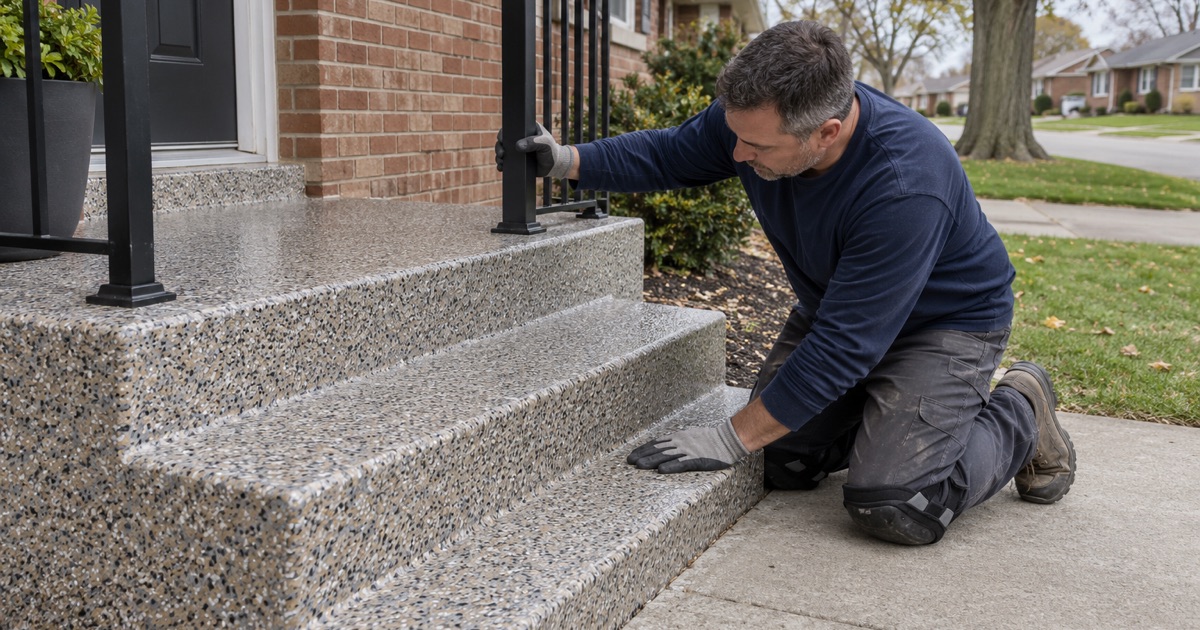
The most common polyaspartic floor we build has a full vinyl flake broadcast locked under a clear polyaspartic topcoat. The chips add color and pattern and hide dust, while the topcoat seals them in and takes the wear. Because the topcoat is UV-stable, light flake blends stay bright on garage floors that see afternoon sun.
Chip size, blend and how densely we broadcast all change the result, so we bring physical samples rather than relying on photos that never match a real floor under garage lighting.
Quartz Broadcast for Heavy Wear
Colored quartz aggregate broadcast into the base and sealed with polyaspartic produces a harder, grittier surface than flake. It suits auto shops, ramps, locker rooms and commercial entries where abrasion and slip resistance matter most. A double broadcast builds even more thickness for floors that take carts and pallet jacks.
Clear Coats Over Concrete, Stain and Metallic Floors
A clear polyaspartic can protect stained concrete, a grind-and-seal floor or a metallic epoxy without changing its color over time. On those floors the topcoat’s job is to take the scuffs and keep the decorative layer underneath from ambering, which is exactly where a standard epoxy topcoat falls short.
Sheen and Slip Resistance
Polyaspartic topcoats come in gloss and satin, and anti-slip aggregates can be added to the final coat. We set the texture by the room: a garage that sees snow melt needs more grip than a dry basement, and a commercial entry more than either.
Installing Polyaspartic the Right Way
Grinding Is Not Optional
A fast-curing coating gives the slab no time to forgive poor preparation. We diamond-grind or shot blast to the profile the manufacturer specifies and remove old sealers and paint completely, because polyaspartic bonded to a weak surface fails with it.
Moisture, Temperature and Dew Point
Polyaspartic can be applied in cooler conditions than most epoxies, but it is not immune to the slab. We test for moisture vapor and measure slab temperature and the dew point spread before coating, and we reschedule when a cold, damp slab would cause blushing, bubbling or poor adhesion.
VOC Limits and Ventilation
Floor coatings sold and applied in Illinois must meet the state’s VOC limits, which bind the applicator as well as the manufacturer. We select compliant products and ventilate the work area during application and cure.
- 20+ Years of Floor Work
- Moisture Test in Every Scope
- Written Proposal, Named Products