Basement Floor Epoxy and the Moisture Question
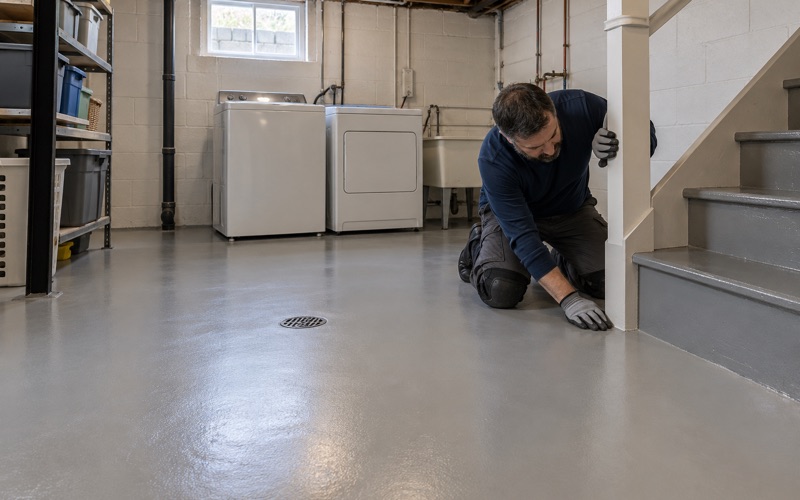
A basement slab sits in the ground, so vapor moves through it in a way a garage slab often does not. Before we coat a basement floor we measure moisture with calcium chloride or relative humidity testing against the product’s limits, because a coating over a wet slab blisters and lifts.
Basements Near the Des Plaines River and Its Creeks
The Des Plaines River runs along the east side of the city, and creeks cross it to the north, center and south. A slab that has been under floodwater can hold moisture, silt and contamination for a long time, so we treat any flood history as part of the basement floor assessment.
Coating After a Flood or Sewer Backup
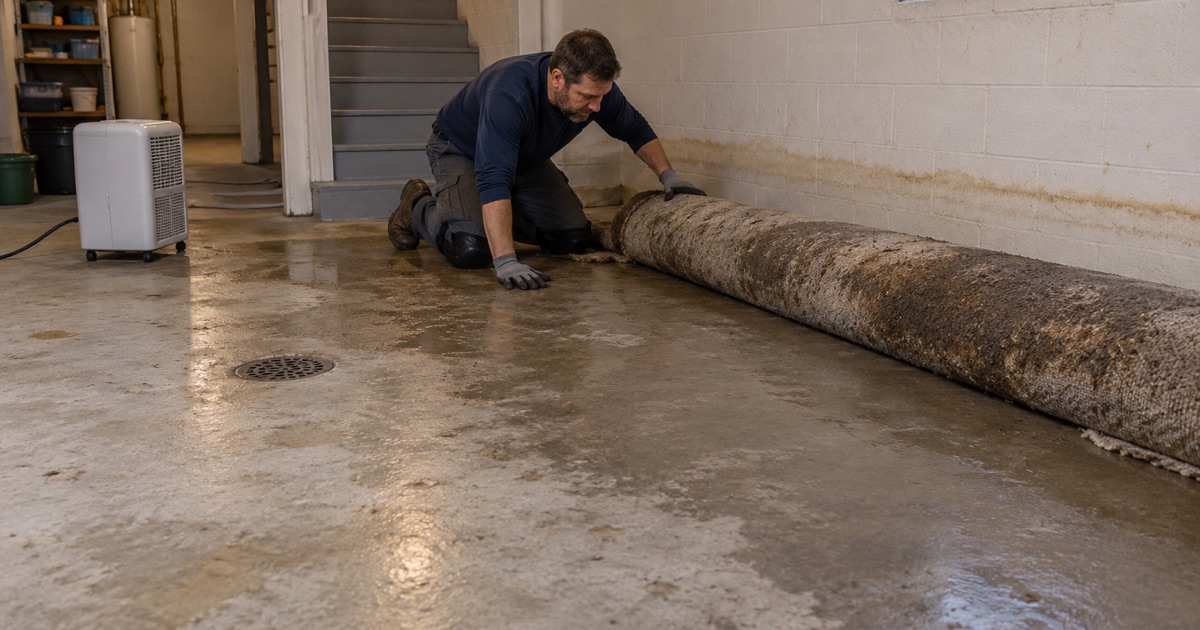
After river water or a sewer backup, the cleanup, disinfection and drying come first, and the slab has to test dry before any coating goes down. We do not coat over a basement floor that is still giving up water, because the coating would trap it and fail.
Overhead Sewers, Backwater Valves and the City Flood Rebate
Des Plaines runs a Flood Rebate Program that reimburses 30 percent of cost, up to $2,000, for work such as overhead sewers, backwater valves and battery backup sump pumps. That drainage work protects the basement, so we recommend sorting it out before a new floor rather than after.
A Floor Coating Is Not Basement Waterproofing
An epoxy floor does not stop water coming up a floor drain, through a wall crack or under hydrostatic pressure from below. We never sell a basement coating as flood protection, and we say so in writing on basement jobs where water has been a problem.
Efflorescence and White Powder on Basement Floors
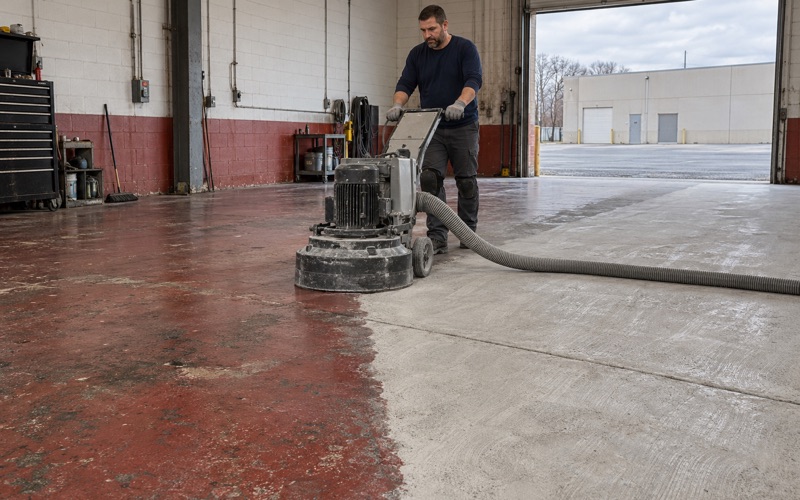
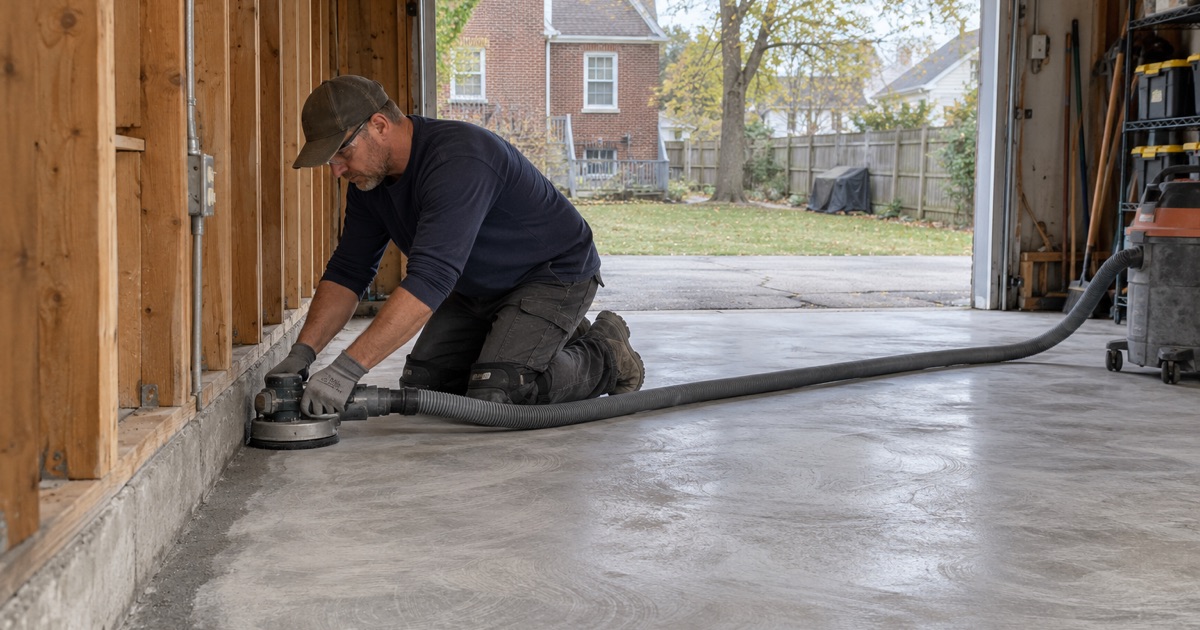
White powder on a basement floor is efflorescence, salt carried to the surface by moisture moving through the concrete. It tells us water is traveling through the slab, so we grind it off, test the floor and decide whether a moisture-mitigation system belongs under the coating.
Moisture-Mitigation Primer for Damp Basement Slabs
When testing shows vapor above what a standard epoxy tolerates, a moisture-mitigation primer can be applied to the ground slab before the decorative and top coats. It is a specific product with its own limits, and we choose it from the test results rather than adding it by habit.
What a Basement Floor Coating Costs
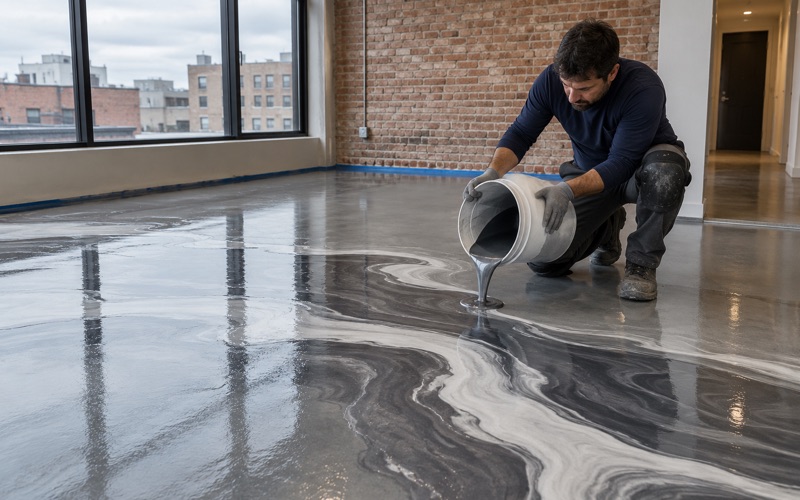
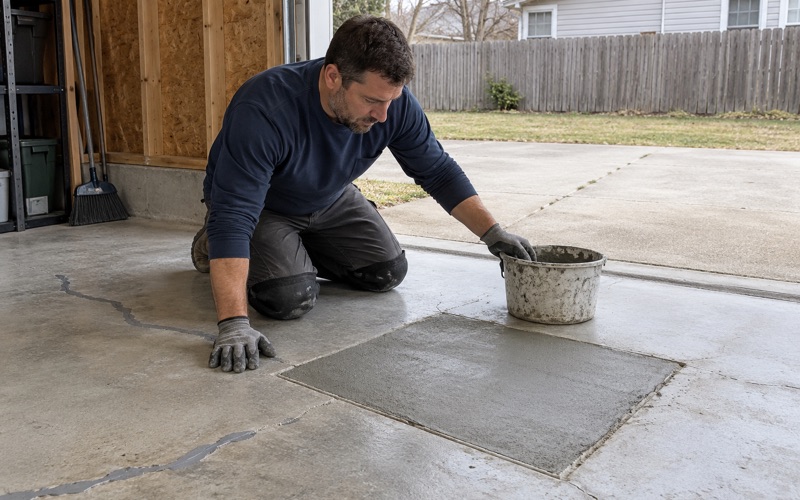
Basement prices move with moisture readings, the need for a mitigation primer, crack repair, the removal of old paint or tile adhesive, and the chosen finish. A dry, sound slab with a simple flake system costs far less than a damp floor that needs mitigation and repair first.
Why a Floor Coating Is Not Radon Mitigation
In Illinois, radon mitigation is licensed work under the Illinois Emergency Management Agency. A floor coating may cover cracks, but we never sell it as radon reduction, and a household with a radon concern should talk to a licensed mitigator before the floor is coated.