Des Plaines Epoxy Flooring installs flake epoxy floors in Des Plaines, IL, serving surrounding cities including Prospect Heights, Schiller Park, Bensenville, Wood Dale and Norridge. Flake is the finish most of our customers pick for garages, basements and workshops, and after more than 20 years of installing it, we know that the chips get the attention while the preparation underneath decides how long the floor lasts.
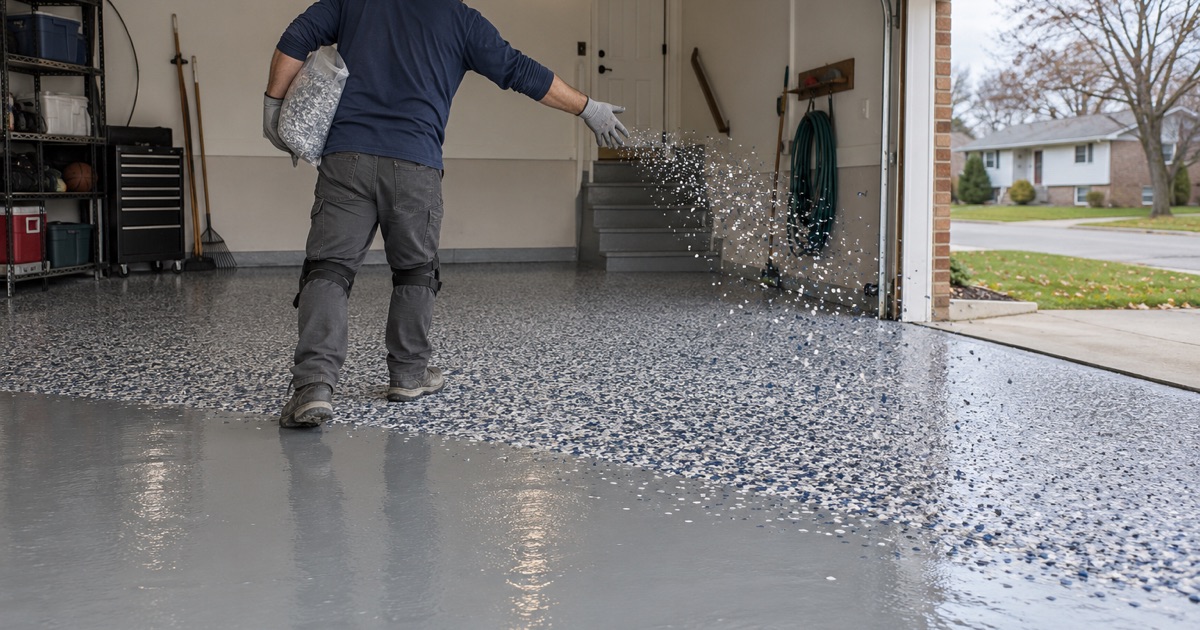
A flake floor is built in layers. The concrete is ground open, cracks are repaired, and a pigmented epoxy base coat is applied. Colored vinyl flakes are then broadcast into the wet base, the excess is removed once it cures, and a clear topcoat seals everything in. The result is a textured, speckled surface that hides dust and small flaws and cleans up easily.
Before we quote, we test the slab for moisture and look at its cracks, patches and old coatings. The written proposal lists the base and topcoat products, the flake blend and size, the number of coats and the finished thickness, so you can compare bids and check the finished floor against the quote.
Choosing Your Flake Blend and Chip Size
Color Blends
Flake blends mix several colors to create a granite-like look. Neutral grays and tans suit most garages and hide salt residue and dust, while bolder blends with accent colors can match cabinets, team colors or a business’s branding. We bring physical samples to your home, because colors on a screen never match chips seen under garage or basement lights.
The base coat color matters too. In a partial broadcast it shows between the chips, and even in a full broadcast it can show slightly through gaps, so we tint it to blend with the chips you choose.
Chip Sizes
Flakes come in several sizes, and small chips create a fine, stone-like speckle that looks calm and refined. Medium chips, around a quarter inch, are the most popular all-purpose choice for garages. Larger chips create a bold, terrazzo-style pattern and a little more texture underfoot. Size also affects how the finished surface feels and how easy it is to clean.
Full Versus Partial Broadcast
A full broadcast covers the base completely, building more thickness and texture and hiding more flaws. A partial or light broadcast scatters chips across a visible base color, giving a more modern look with less texture. Most garages get a full broadcast because it is the most forgiving surface for winter salt and daily use.
How We Build a Flake Epoxy Floor
Grinding and Repair
We diamond-grind every slab to open the surface and remove old sealer, paint and contamination. Cracks, pits and spalls are filled and ground flush. Skipping this step and rolling a flake system onto an acid-etched or painted slab is the most common reason flake floors peel in the first year or two.
Base Coat and Broadcast
A 100% solids epoxy base, or a moisture-mitigation primer followed by the base when readings require it, is applied at the specified thickness. While it is wet, flakes are broadcast by hand into the coating. Timing matters, because chips need to land while the base can still grip them firmly.
Scraping, Vacuuming and Topcoat
Once the base has cured, loose chips are scraped off and vacuumed, and the surface is checked for high spots. A clear polyaspartic or polyurethane topcoat then seals the chips. We apply it at the thickness listed in the proposal, which controls how smooth or textured the final surface feels and how much wear it can take.
Topcoats for Flake Floors
Polyaspartic for UV Stability and Speed
Polyaspartic topcoats resist ultraviolet ambering, cure quickly and handle abrasion and road salt well. They are our standard choice over flake in garages, where sunlight through an open door would yellow a plain epoxy topcoat over time.
Texture and Sheen
A thicker topcoat produces a smoother surface that is easier to mop. A thinner topcoat leaves more of the chip texture, giving more grip. Gloss looks sharp, while satin hides scuffs and dust better, and anti-slip additives can be mixed in for ramps, steps and wet areas.
Where Flake Floors Work Best
Garages That Face Road Salt
Garages are the classic flake floor. The texture helps with grip when snow melts off cars, and the speckled pattern hides the white residue that brine and rock salt leave behind. A sealed floor keeps that brine on the surface, where it can be squeegeed out instead of soaking into the concrete.
Basements, Laundry Rooms and Storage
In basements, a flake floor brightens dark spaces, hides the imperfections of older slabs and cleans easily around washers, freezers and storage shelving. Moisture testing comes first, because basement slabs are where vapor problems show up most.
Workshops and Light Commercial Spaces
Workshops, small warehouses, locker rooms and retail backrooms use flake floors for durability and easy cleaning. For heavier abrasion, we may recommend quartz broadcast instead of vinyl flake, since quartz builds a harder surface.
Flake Compared With Solid Color and Metallic Finishes
A solid color floor looks clean and makes dropped hardware easy to find, but it shows tire marks, dust and every repaired crack. A metallic floor is striking in a basement living space but is smooth, reflective and less forgiving of grit. Flake sits between them: decorative enough for a finished room, forgiving enough for a working garage, and the easiest of the three to keep looking new.
Caring for a Flake Epoxy Floor
Routine Cleaning
Sweep or dust mop regularly and wash with a pH-neutral cleaner and a soft mop or deck brush. In winter, squeegee melted snow and salt water out of the garage every week or two so residue does not dry and dull the finish.
Refreshing the Topcoat
Over years of use, the topcoat in tire paths and walkways can wear. It can be cleaned, scuff-sanded and recoated to restore the surface without disturbing the flake layer underneath, which costs far less than replacing the floor.
- 20+ Years of Floor Work
- Moisture Test in Every Scope
- Written Proposal, Named Products