Des Plaines Epoxy Flooring pours metallic epoxy floors for homes and businesses in Des Plaines, IL, serving surrounding cities including Prospect Heights, Schiller Park, Bensenville, Wood Dale and Norridge. Metallic floors are the most demanding decorative system we install, and more than 20 years of concrete preparation is what makes them come out right.
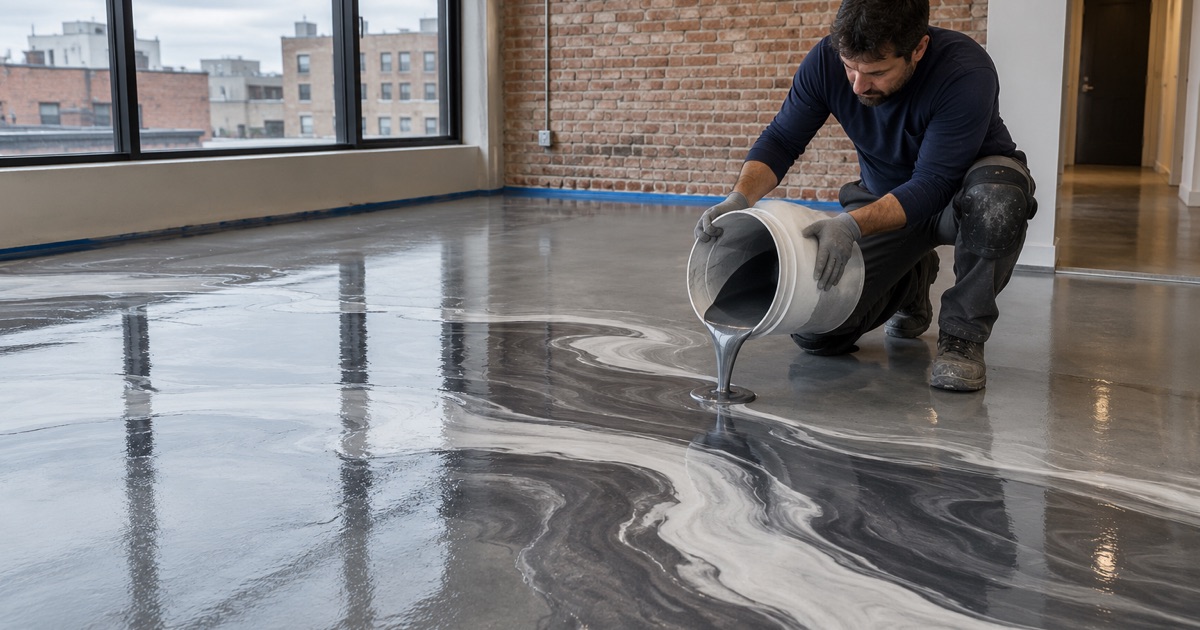
A metallic epoxy floor uses fine metallic pigments suspended in a clear epoxy. As the coating is poured, rolled and worked, the pigments drift and swirl, creating depth that reads like marble, liquid metal, pearl or lava. The effect is striking in a basement bar, a showroom or an office lobby.
It is also unforgiving. A metallic coating shows every bump, patch and trowel mark beneath it, so the slab has to be ground flat and repaired before any color goes down. We look at the floor carefully, test it for moisture, and tell you if the slab needs leveling first.
Metallic Epoxy for Homes and Businesses
Basements, Bars and Home Living Spaces
Finished basements are where many homeowners first choose metallic epoxy. A marbled floor turns a family room, home theater, bar or gym into a finished space without wood or carpet that suffers from basement humidity. Because basement slabs give off moisture, we test before quoting and add a moisture-mitigation primer when readings require one.
Metallic floors also suit kitchens, mudrooms and modern interiors on slab-on-grade homes. They are seamless and easy to clean, and they can be designed around cabinet, wall and furniture colors.
Showrooms, Salons and Offices
Businesses use metallic epoxy to make an entrance memorable. Car showrooms, salons, boutiques, restaurants and offices choose it for its depth and for colors that can lean toward their branding. We phase commercial work around business hours and coat in sections where the space must stay open.
Show Garages
For collectors and enthusiasts, a metallic show garage pairs well with display lighting and cabinetry. A UV-stable topcoat is essential where a door opens to daylight, and we usually recommend a satin topcoat or fine anti-slip additive for safer footing when the floor gets wet.
Metallic Finishes and Design Choices
Marble, Lava, Pearl and Ocean Effects
The look depends on pigment choice and technique. Rolling and back-rolling creates soft clouds, solvent spraying opens cells and lava-like patterns, and directional brushing produces flowing movement. We show you sample boards made with the actual products and agree on the style before pouring.
Lighting changes how a metallic floor reads. A floor that looks deep and silvery under showroom lights can look warmer in a basement, so we review samples under the lighting of your space.
Color choice matters for daily living as well as looks. Very dark metallic floors show dust, pet hair and footprints sooner, while silver, champagne and mid-tone blends hide everyday traffic better. We talk through how the room is used before you settle on a palette.
Single-Color and Multi-Color Metallic Floors
A single-color metallic floor has calm, consistent movement. Two or three colors poured together create stronger contrast and veining. Multi-color floors take more planning and a larger crew, because the colors have to be placed and worked while the epoxy is still open.
Borders, Saw Cuts and Inlays
Saw-cut lines and borders can divide a large metallic floor into sections and give the pattern structure. We plan them around control joints so the floor’s own movement does not crack through the design. A cut line also gives the crew a natural stopping edge on a very large floor, which keeps the pour consistent when one section cannot be finished in a single session.
Why Preparation Decides the Result
Grinding Flat and Opening the Surface
We diamond-grind every metallic floor to remove old coatings, sealers and laitance and to open the surface for bond. Because a reflective finish exaggerates highs and lows, we spend more time flattening a metallic slab than one receiving flake.
Filling Cracks, Joints and Pits
Cracks, pits and control joints are filled with repair materials made to be coated and ground flush. On a metallic floor, a repair that is slightly proud or sunken shows as a shadow, so we check each patch under raking light before primer.
Primer and a Solid Base Coat
A tinted primer and base coat seal the slab and give the metallic pour a uniform background. That base controls outgassing from the concrete, which would otherwise rise through the metallic coat as pinholes and bubbles.
Metallic Epoxy Compared With Other Decorative Floors
Metallic Epoxy Versus Flake Floors
A flake floor is textured, forgiving and hides dirt, which makes it the practical choice for working garages and laundry rooms. A metallic floor is smooth and reflective, which gives it far more visual depth but also shows dust, scratches and slab flaws sooner. We often recommend metallic for living and display areas and flake for the spaces that take the hardest daily use.
Metallic Epoxy Versus Polished Concrete
Polished concrete gets its beauty from the stone already in the slab, so its look is limited by what the concrete contains. Metallic epoxy brings in color and movement the slab never had, which makes it the better choice when the concrete is plain, patched or stained. Polished concrete wins where a film coating could blister from moisture or wear through under forklifts.
Metallic Epoxy Versus Tile and Vinyl Plank
Tile and vinyl plank have seams and grout lines that trap dirt and can let water reach the slab. A metallic epoxy floor is seamless, cleans with a damp mop and bonds directly to the concrete, so there is nothing to float, curl or separate in a damp basement. It also avoids the transitions and trim that a plank floor needs at every doorway.
Our Step-by-Step Metallic Epoxy Floor Process
Step 1: Design, Samples and Slab Assessment
We agree on colors and style with sample boards, test the slab for moisture and map repairs. Nothing is ordered until the sample and the readings are both approved.
Step 2: Grinding and Repairs
The floor is ground flat, cracks and joints are filled and sanded flush, and dust is removed thoroughly. Any dust left on the slab ends up suspended in the clear metallic coat, so the floor is vacuumed and tack-wiped until it is clean before primer.
Step 3: Primer and Base Coat
A primer seals the concrete, followed by a tinted base coat that sets the background color. The base color shows through the thinner areas of the metallic pour, so it is chosen with the pigments.
Step 4: Metallic Pour
The metallic epoxy is poured, spread and worked into the agreed pattern while it is still open. This step moves fast, and the crew works in spiked shoes so it can walk the wet coating and keep the pattern consistent from wall to wall. Room temperature and slab temperature are checked first, because a cold floor thickens the epoxy and changes how the pigments travel.
Step 5: Protective Topcoat
A polyaspartic or polyurethane topcoat protects against scratches and ultraviolet ambering and sets the final sheen. Satin or gloss is decided at the sample stage, not on the day.
Living With a Metallic Epoxy Floor
Cleaning and Care
Dust mop often and damp mop with a pH-neutral cleaner. Grit is the main cause of fine scratches, so mats at entrances and felt pads under furniture go a long way. Avoid harsh acids and solvent cleaners that can dull the topcoat.
Recoating the Topcoat
When the topcoat wears in busy areas, it can be cleaned, scuff-sanded and recoated without touching the metallic layer beneath. That keeps the original pattern intact for years.
Cost Factors for Metallic Floors
Slab condition, leveling, the number of colors, borders and the topcoat all affect price. Our written proposal lists the products, coats and finished thickness so you know exactly what you are buying.
- 20+ Years of Floor Work
- Moisture Test in Every Scope
- Written Proposal, Named Products